




Aloira

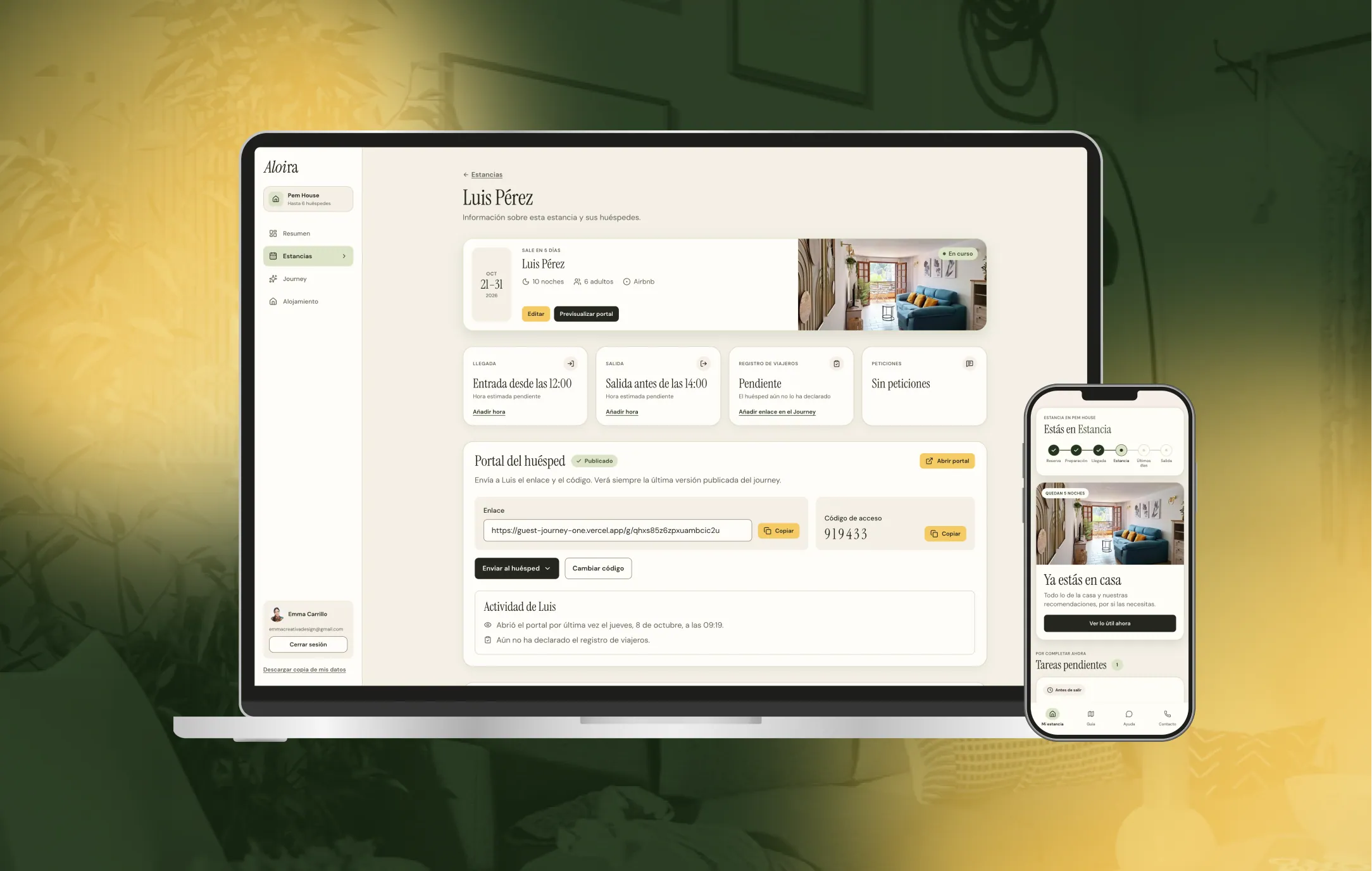
The Aloira host dashboard on a laptop and the guest portal on a phone, over a warm photo of a living room
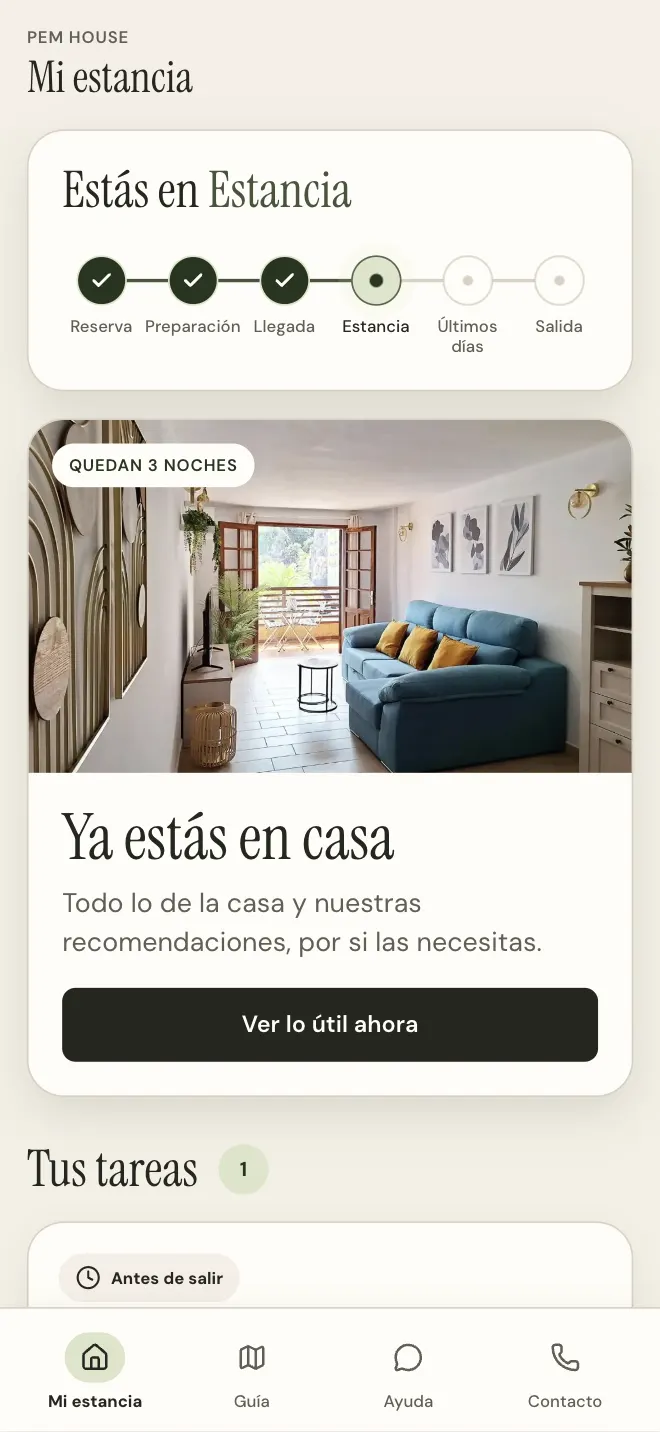
Aloira guest portal on a phone: a stay progress tracker, a welcome card and the pending tasks

Overview

I designed and developed a digital product that guides guests throughout their stay and helps independent hosts manage their property information without repeating the same tasks for every booking.

Project:
  • Independent Product
  • UX/UI Design
  • Hospitality Tech
My role:
Product Strategy, UX Research, UX/UI Design, Design System
Timeline:
September–October 2026 · MVP built in just over 4 weeks
Status:
Functional MVP, ready for real-world pilot testing

Finding an opportunity in a growing hospitality market

In 2025, short-term rentals accounted for nearly 952 million guest nights across the EU, including 189 million in Spain.

Despite existing digital solutions, independent hosts still face challenges managing guest information scattered across booking platforms, emails, and messaging apps.

Having experienced these challenges firsthand as a vacation rental host, I saw an opportunity to explore a more contextual approach: making the right information available at the right moment, while reducing repetitive work without losing the personal touch.

That's how Aloira was born.

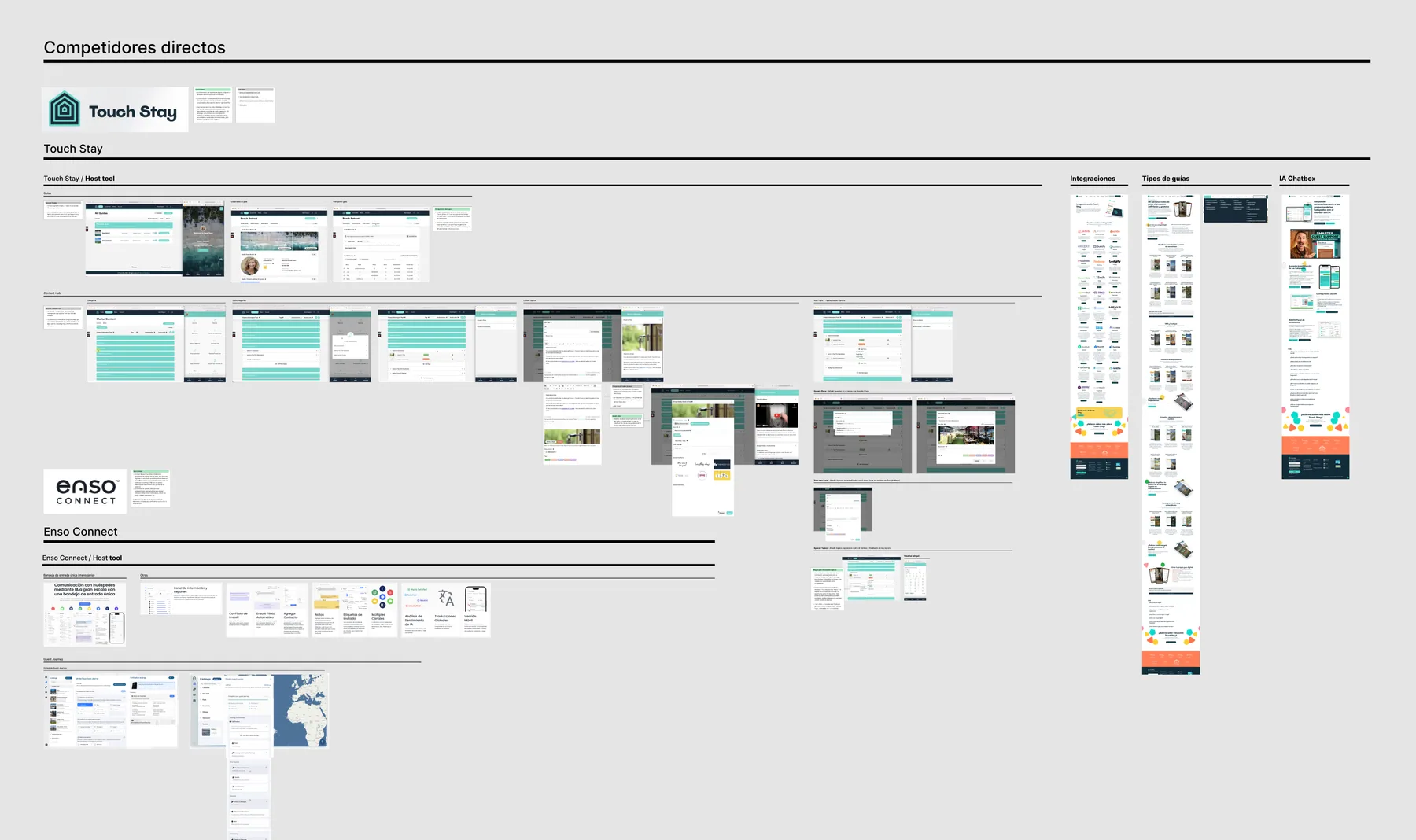
Benchmark board comparing how other products organize and deliver guest information
I conducted a benchmark to understand how other products are solving the problem.

From scattered information to a problem of context

Before designing a solution, I needed to understand whether other guests and hosts experienced the same problem.

I conducted two interviews with vacation rental hosts and surveyed 20 guests who had traveled recently.

The findings revealed a clear pattern:

19 / 20

guests had to search again for information they had already received.

11 / 20

guests remembered receiving the information but couldn't remember where to find it.

17 / 20

guests contacted their host during their stay, particularly about arrival, access, or check-out.

“The information was there, but I couldn't find it the first time.”
Survey participant

The sample was small and exploratory, but it helped me reframe the problem.

The information wasn't missing. The context was.

Receiving instructions doesn't mean guests will be able to find or understand them when they actually need them.

The interviews revealed another need: hosts wanted to avoid sending the same information repeatedly and know whether guests had followed important instructions.

But there was something they didn't want to lose.

“If everything becomes automated, I start losing that personal connection with people.”
Host interview participant

This insight shifted the product's direction. The goal wasn't to automate every interaction, but to remove friction without losing the human connection.

The challenge: simplifying two connected experiences

The product needed to address two different sets of needs.

For guests

It meant finding the right instructions and completing essential tasks throughout their stay without constantly relying on the host.

For hosts

It meant setting up their property's information once, reusing it across bookings, and staying in control of what they shared.

With an MVP limited to three properties and no integrations with booking platforms, I had to prioritize the essential user journeys. Guests would access the portal from their phones using a link and an access code, without creating an account.

The principle guiding my design decisions was simple: make routine tasks easier, so there's more room for personal connections.

Introducing Aloira: two spaces, one connected experience

Aloira connects two experiences designed around the needs of independent hosts and their guests.

A mobile-first companion

For guests: A simple portal that guides guests through each stage of their stay, making relevant information and assistance easy to access when they need it.

A centralized management space

For hosts: A dashboard to organize property information, manage stays, and share content with guests without repeating the same tasks for every booking.

One connected experience: hosts prepare the information once, and Aloira delivers it to guests at the right moment of their journey.

The decisions that shaped the product

Turning this concept into a functional MVP meant making deliberate choices about how information is delivered, how hosts manage it, and where automation should stop.

Delivering the right information at the right time

Instead of presenting everything in a static guidebook, I structured the guest experience around six stages, from booking to departure.

The portal adapts its content to the current stage. Important instructions become available when they're relevant, while upcoming information clearly indicates when guests will be able to access it.

This way, guests don't have to remember where to find a message sent days earlier.

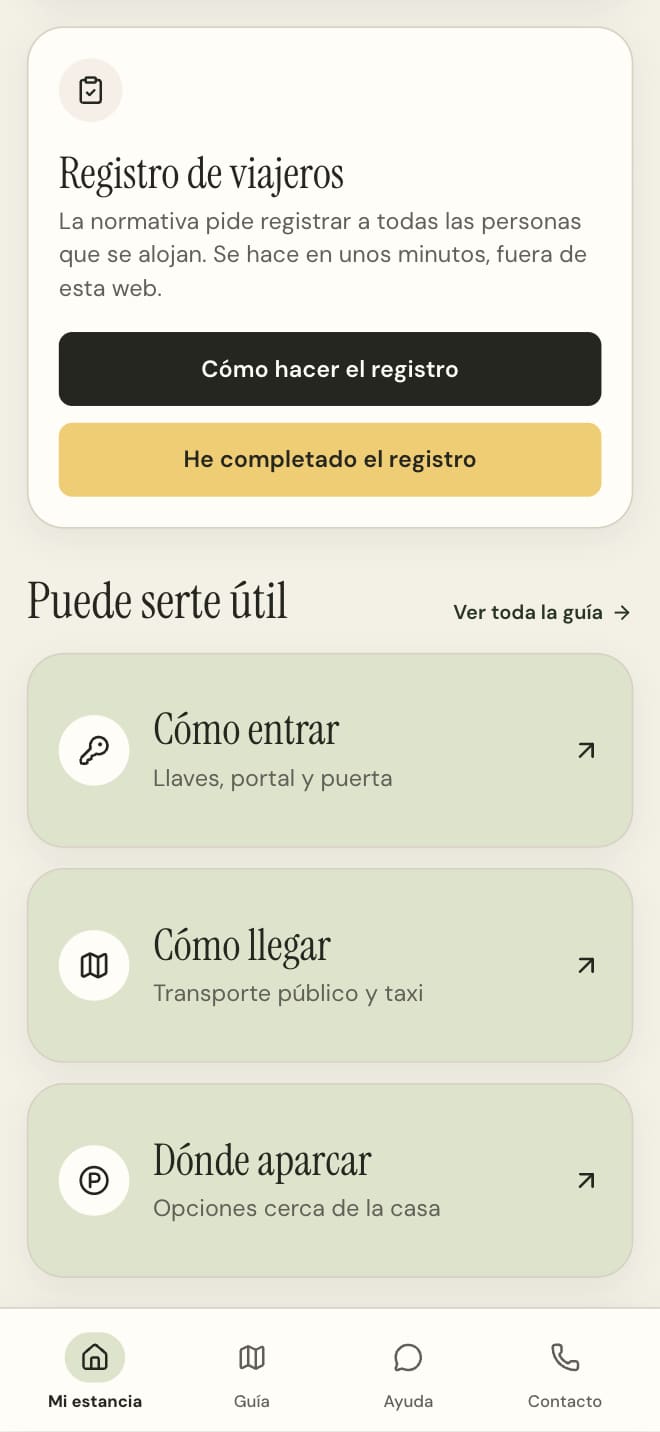
  • Guest portal on arrival day: traveler registration card and a list of useful guides such as how to get in, how to arrive and where to park

    Stage 3: Arrive

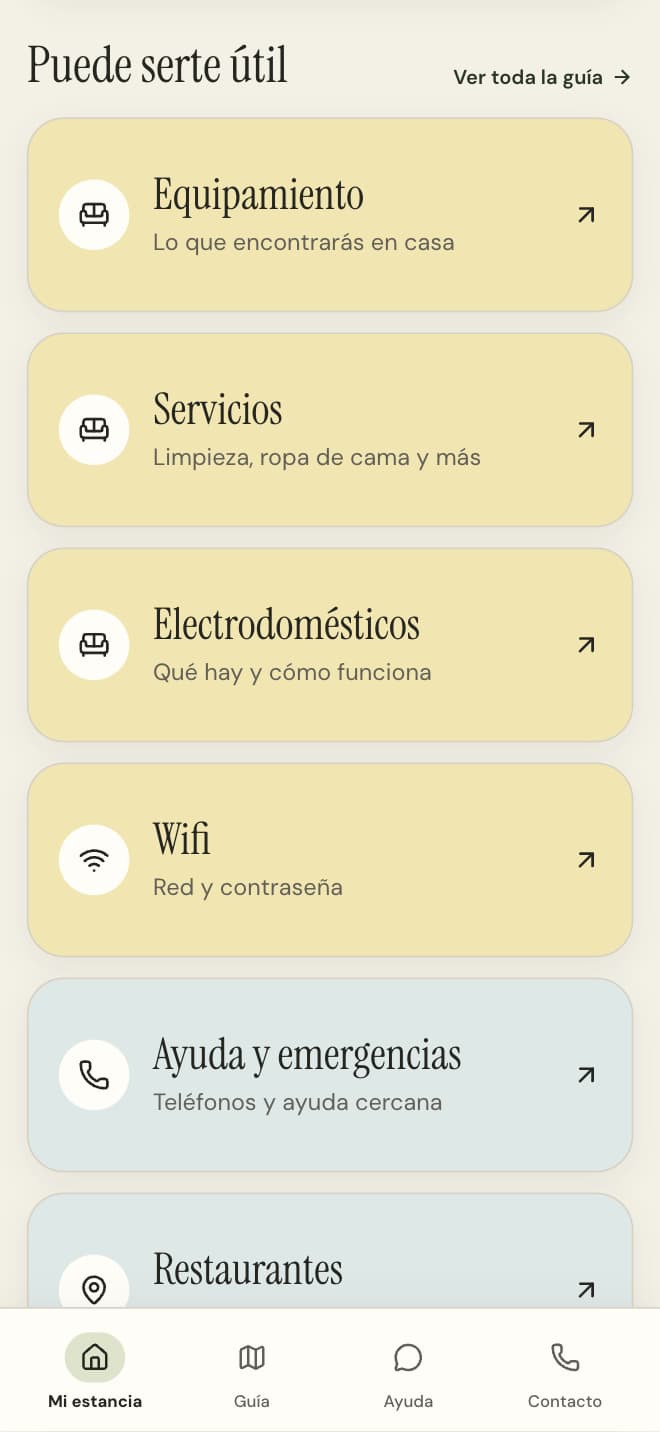
  • Guest portal during the stay: guides for equipment, services, appliances, wifi and emergency help

    Stage 4: During the stay

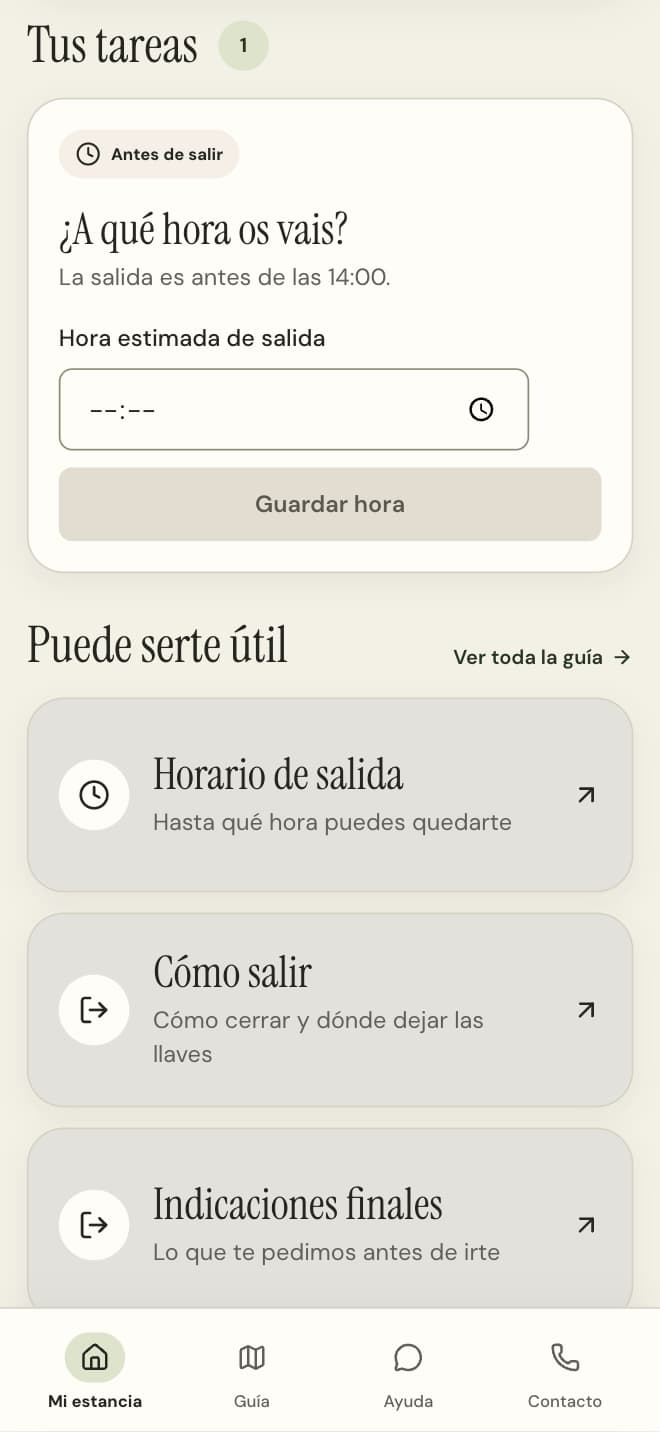
  • Guest portal on the last day: a form to share the departure time and guides about check-out

    Stage 5: Last day

Making information accessible without losing context

Prioritizing information based on the stage of a stay introduced a new challenge: guests still needed the freedom to find information whenever they wanted.

I designed Guide as a complementary space to My Stay, keeping previously available content easy to access throughout the stay. Upcoming sections remain visible but locked, with a clear indication of when they'll become available.

This way, guests can explore information independently without losing the benefits of contextual guidance.

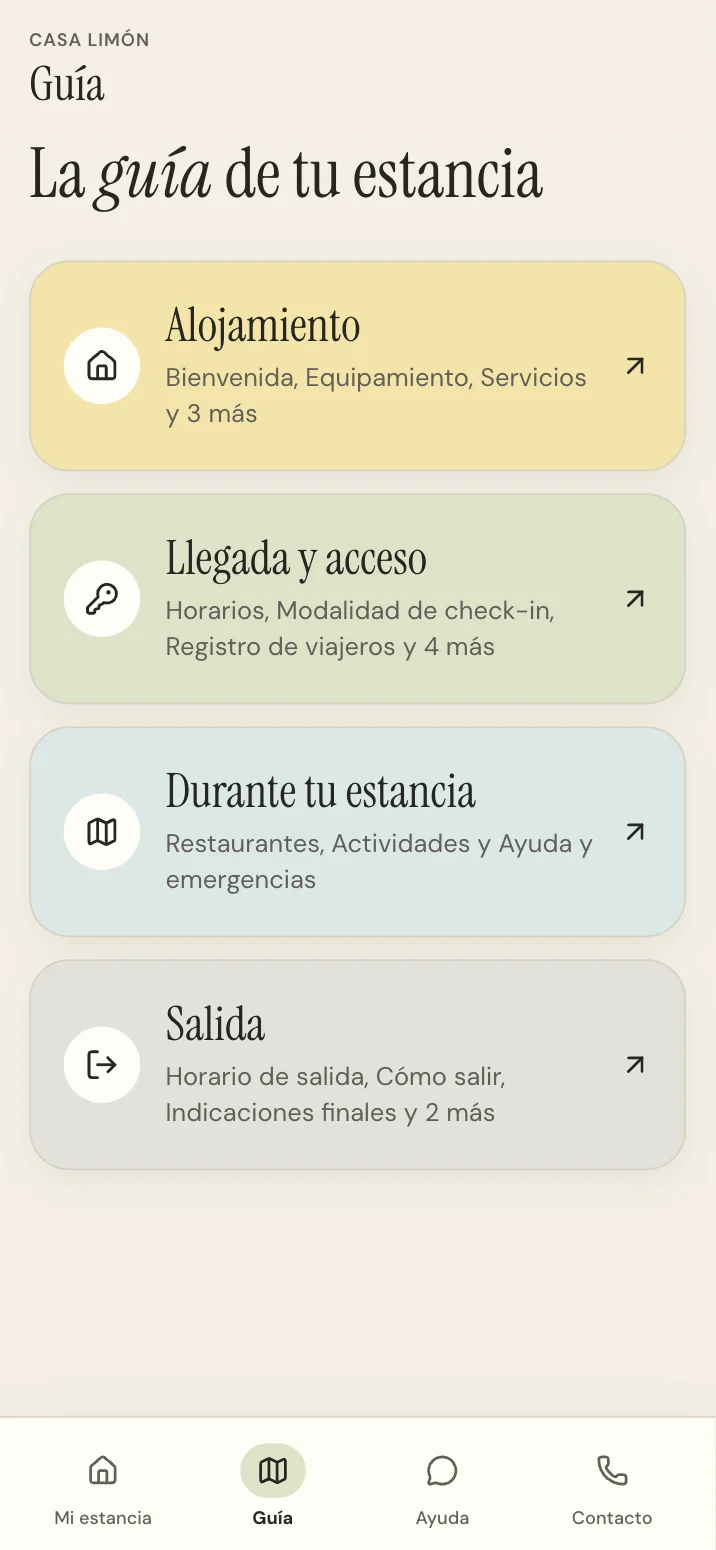
  • Guide home in the guest portal: four sections, Accommodation, Arrival and access, During your stay and Departure, each with a short list of what it contains

    Guide: Content grouped by moment of the stay.

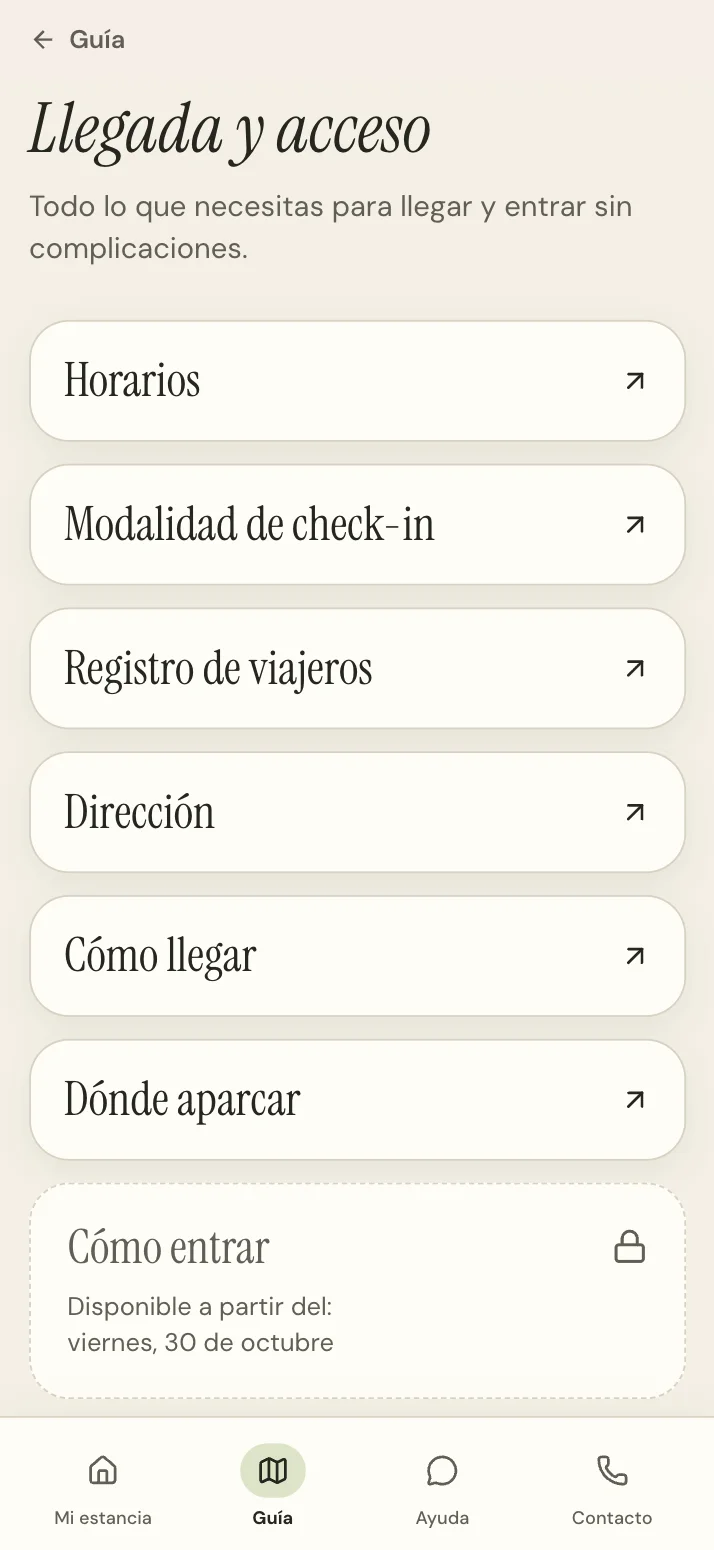
  • Arrival and access section of the Guide: available topics such as schedules, check-in method and where to park, and a locked topic showing the date it becomes available

    Arrival and access: Locked content shows when it unlocks.

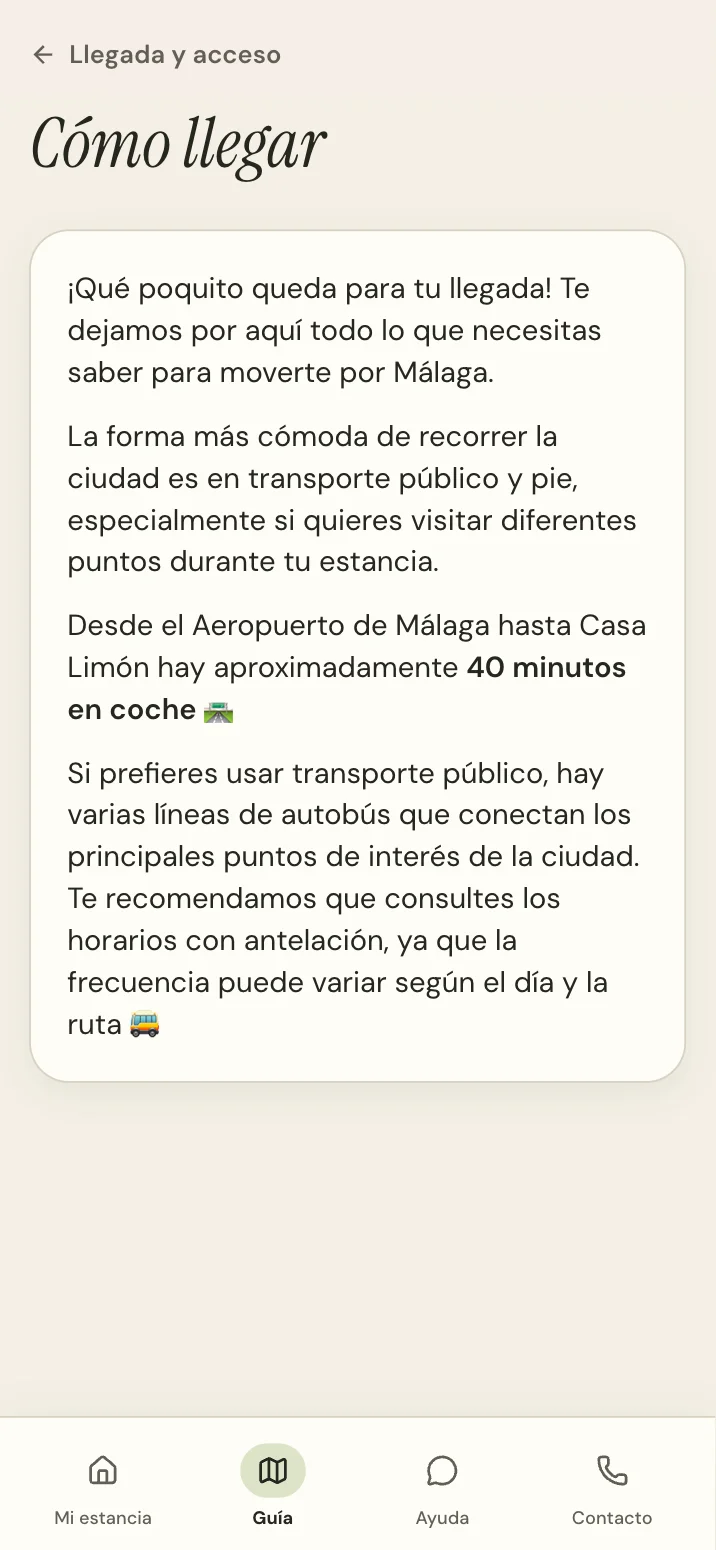
  • How to get there: a host-written guide with driving time from the airport and public transport advice

    How to get there: Content written by the host.

Separating property details from the guest experience

I designed two complementary spaces to help hosts manage information without losing the ability to personalize the guest experience.

Property: Define the place and its identity

Hosts set up their property's essential details, rules, amenities, and check-in information once. They can also define a tone of voice that guides AI-generated text and guest assistance, keeping communication consistent with their hosting style.

Property: Setting up the essential details, rules and tone of voice.

Stay experience: Shape the guest experience

Hosts decide what guests see at each stage of their stay, from booking to departure. Guided content blocks make it easier to organize information around the moments when it's most useful.

Stay experience: Filling in the information that appears at each stage in the guest portal.

Both are reusable across stays. Hosts can save changes as drafts and publish when ready, maintaining control over what guests see without having to start from scratch for every booking.

Using AI without compromising trust

I introduced AI at two specific points: helping hosts improve their written content and helping guests find answers to their questions.

But I established clear boundaries.

AI cannot publish content, make up instructions, or provide information that guests aren't yet allowed to access.

When it can't find an answer, it acknowledges the limitation and offers a way to contact the host directly.

AI was meant to support hospitality, not replace it.

AI help chat and transition to WhatsApp.

For hosts, this takes the form of an Improve text action available in the Property and Stay experience sections of the host portal. It refines what they've written, and nothing changes until they review it and publish.

Improve text: AI suggestions for the Property and Stay experience sections of the host portal.

Turning reusable content into personalized stays

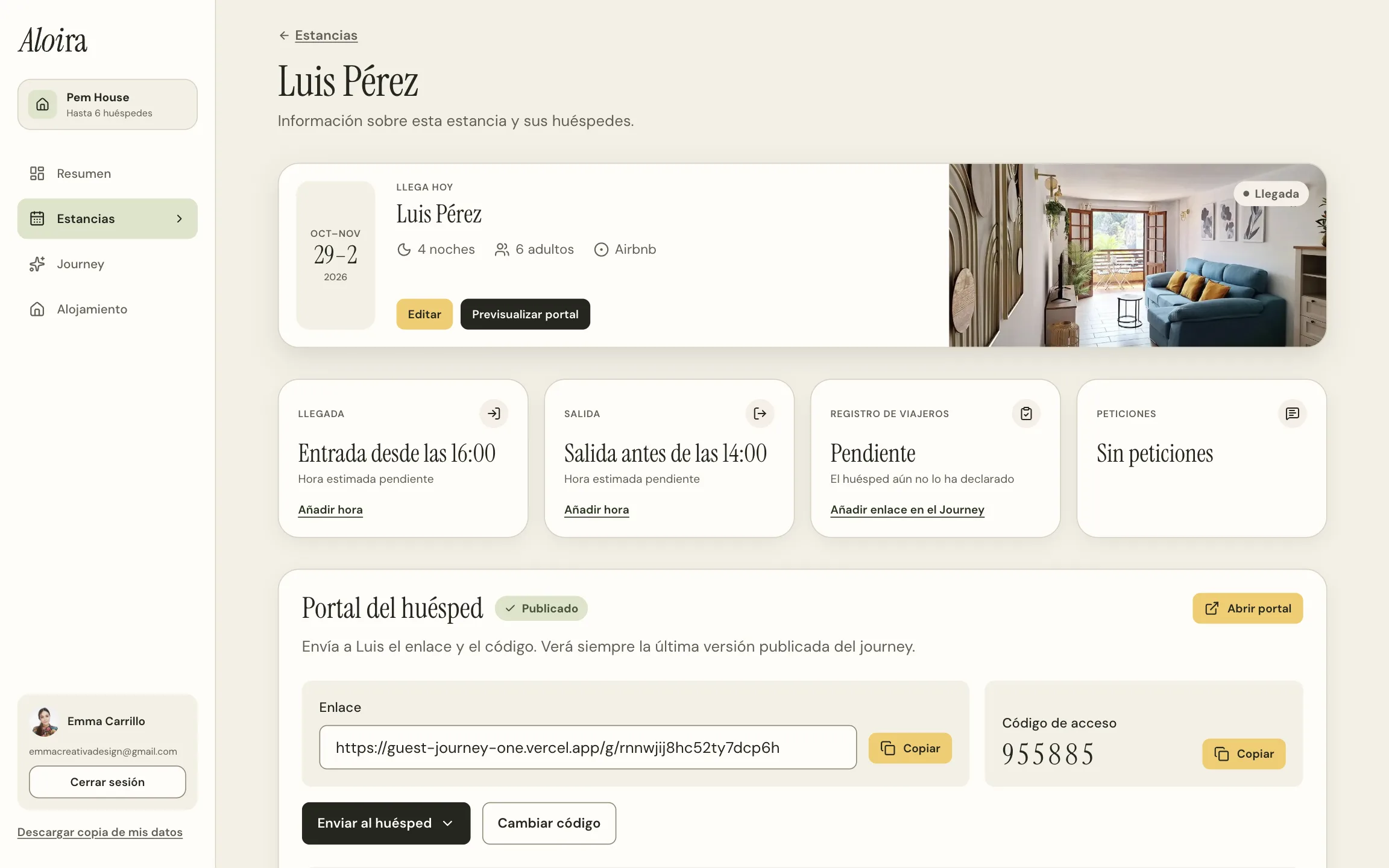
I designed the Stays section as the bridge between the host dashboard and the guest experience.

Instead of setting up a new portal for every booking, hosts create a stay by adding guest details and reservation dates. Aloira automatically connects it to the property's existing information and Stay experience.

Each stay gets its own guest portal, with content adapting to the booking timeline. Hosts can share access through a link and code, while guests can explore their stay without creating an account.

The goal was to make every stay feel personal without making hosts start from scratch.

Stays: Creating a stay and sharing guest access with a link and code.
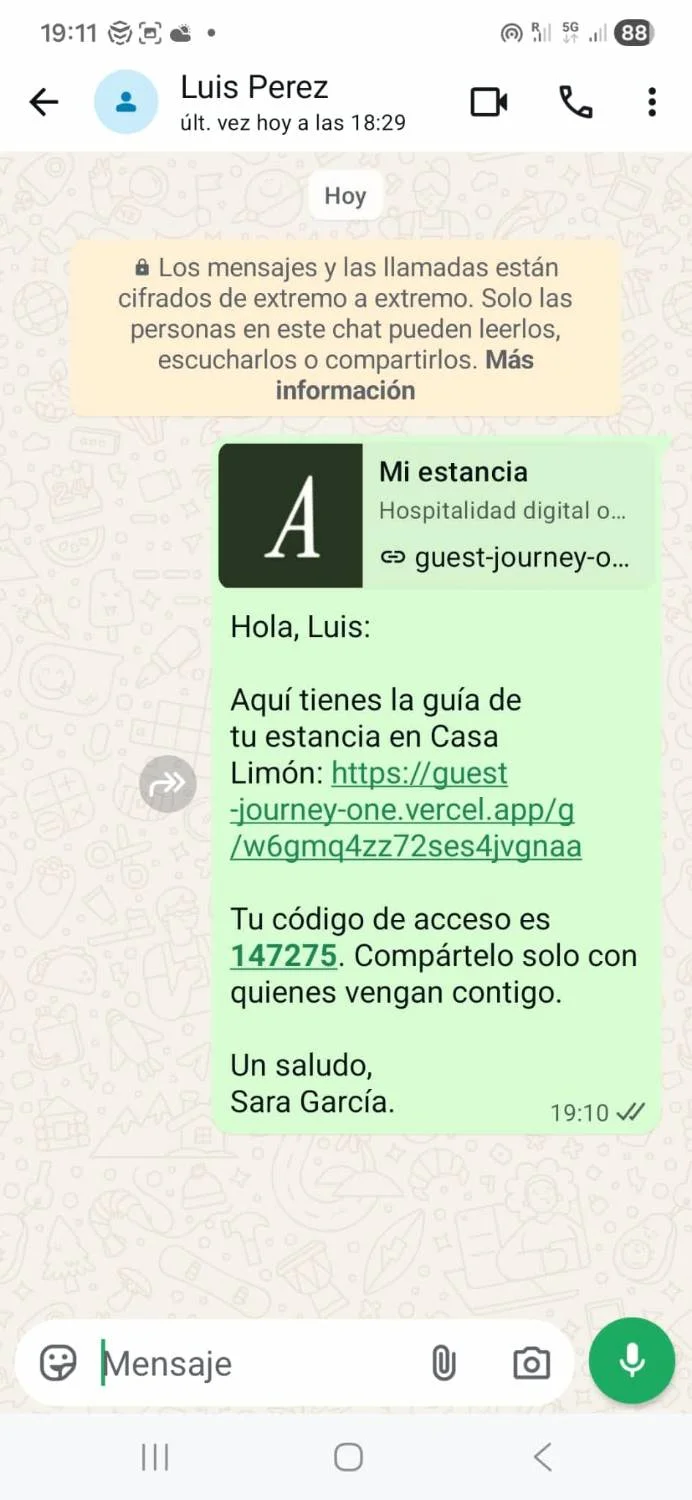
WhatsApp message from the host to the guest with a link to the stay guide and a personal access code

Message generated from the host dashboard, ready to send to the guest.

Guest access: opening the stay portal with the link and code.

Outcomes & expected impact

In just over four weeks, I turned an initial hypothesis into a functional MVP, connecting the host management experience with a contextual, mobile-first guest portal.

Designed specifically for independent hosts, Aloira aims to deliver value in three areas:

  • Operational efficiency: Less time spent repeating instructions and answering routine questions.
  • Guest experience: Easier access to relevant information, with less friction throughout the stay.
  • Simpler management: A focused alternative for hosts who don't need the complexity of a full property management system.

To assess its potential, I built an initial impact model based on booking volume, repetitive enquiries, and time spent responding. The model helps estimate where time savings could come from, rather than claiming results that haven't yet been measured.

The next step is to test these assumptions during real stays, tracking guest enquiries, information accessibility, and the effort required to manage each booking.

Potential impact areas

  • Time saved

    Host time spent on routine communication

  • Fewer enquiries

    Guest questions answered without host intervention

  • Smoother stays

    Guest confidence and access to instructions

What I learned

Finding opportunities where market trends and user needs intersect. While exploring existing solutions, I noticed a tendency towards feature-heavy platforms and static digital guidebooks. But independent hosts needed simplicity without losing control or personal contact, while guests needed information that was relevant to each moment of their stay. Connecting these perspectives helped me identify an opportunity for a more focused, contextual experience.

AI expanded my role beyond the interface. Writing a detailed build spec and developing the MVP pushed me to explore product logic, edge cases, and technical constraints more deeply. It also meant defining clear boundaries for AI: protecting personal data, limiting responses to information provided by hosts and available to guests, and redirecting questions to the host when answers weren't available.

Technical constraints shape the user experience. Leaving booking platform integrations out of the MVP simplified development but increased manual work for hosts. It reinforced the importance of balancing technical feasibility with ease of adoption.

What I'd do differently: Test the host setup experience earlier to understand whether the effort required could become a barrier to adoption.

Have a product challenge in mind?

I enjoy working on projects where understanding the problem matters just as much as designing the solution.

If you're building or improving a digital product, let's start with a conversation.